

Did They Bury And Concrete Animals In Chernobyl
W eastward are in the woods behind the Chernobyl plant when the canis familiaris runs at us. It is sparse, with brindle fur and yellowish eyes. Igor, our guide, makes a lunge and clamps his hands over its snout. They wrestle in the snow and icy h2o shakes from the trees. The dog'southward eyes flash as Igor grabs a stick and throws it into the copse. Distracted, the animate being chases information technology and our little group is free to motility. Only the dog reappears and drops the stick at Igor's human foot. He throws it again. The canis familiaris brings it dorsum. I most laugh with relief.
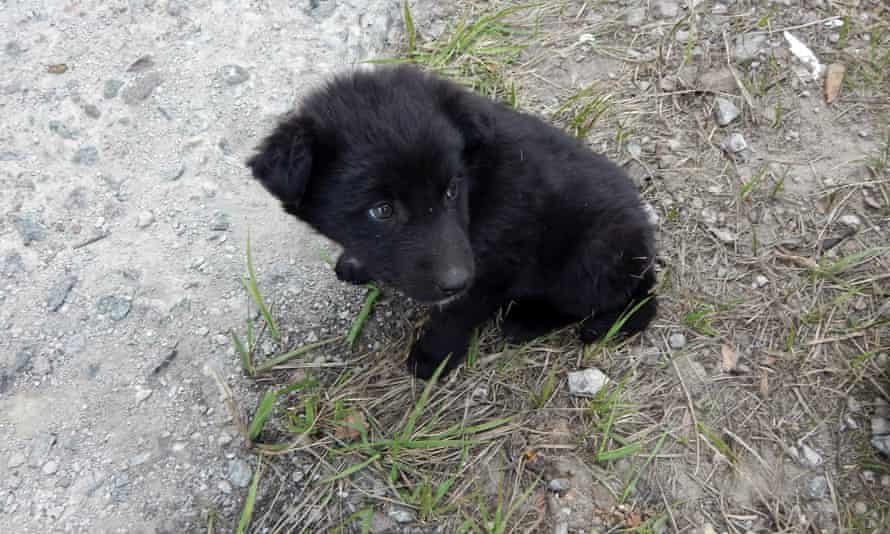
Igor, who, it turns out, is very familiar with the domestic dog, throws a few snowballs, which information technology tries to catch and chew. "This is Tarzan," says Igor. "He's a stray who lives in the exclusion zone. His mum was killed past a wolf, so the guides look out for him, chuck a few sticks, play a few games. He'southward only a baby, really …"
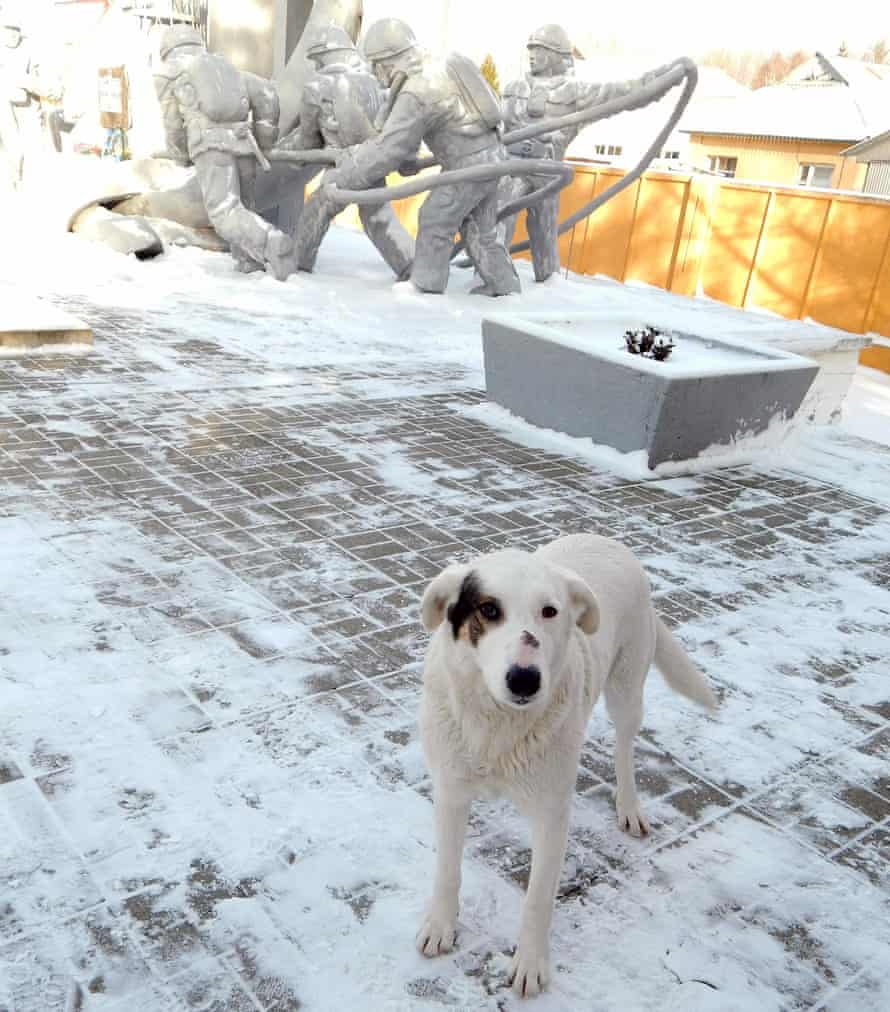
Tarzan isn't alone. There are approximately 300 devious dogs in the two,600km² zone. They live among the moose and lynx, the hares and wolves that have too plant a domicile here. But while the Mongolian horses and Belarusian bears were recently introduced to the area, and other animals have come up in as opportunists, the dogs are native.
After the Chernobyl disaster in 1986, Pripyat and the surrounding villages were abandoned, and residents were not allowed to have their pets to prophylactic. Chernobyl Prayer, a devastating oral history of the flow, tells of "dogs howling, trying to get on the buses. Mongrels, alsatians. The soldiers were pushing them out again, kick them. They ran later on the buses for ages." Heartbroken families pinned notes to their doors: "Don't kill our Zhulka. She's a practiced dog." There was no mercy. Squads were sent in to shoot the animals. But some survived and it is mainly their descendants that populate the zone.
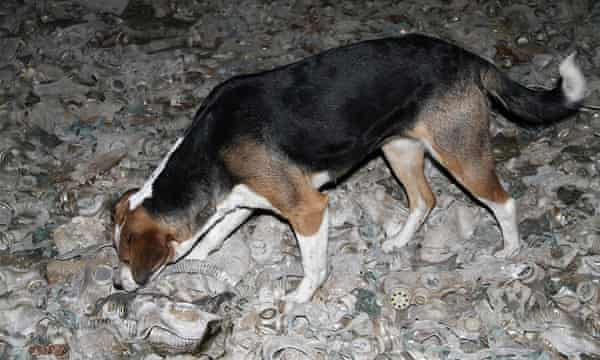
Life is not piece of cake for the Chernobyl strays. Not only must they endure harsh Ukrainian winters with no proper shelter, but they frequently bear increased levels of radiation in their fur and have a shortened life expectancy. Few live across the age of half dozen.
Just it's non all bad news. The dogs that alive almost the zone'south checkpoints have lilliputian huts made for them by the guards, and some are wise enough to congregate near the local cafe, having learned that a human presence equals food. These canine gangs act as unofficial Chernobyl mascots, at that place to greet visitors who cease at Buffet Desyatka for some borscht.
Nadezhda Starodub, a guide with the Chernobyl tour specialist Solo Due east, says the visitors (there are no "tourists" in the zone) love the dogs. "Most of the time people detect them beautiful, only some recollect they might exist contaminated and so avoid touching the dogs." At that place are no rules that forbid a company from handling them, but Nadezhda asks her charges to exercise the same mutual sense they would when approaching any stray. "Some guides are afraid of complaints," she says, "and then they attempt to avert the dogs to stay on the prophylactic side. But I beloved them."
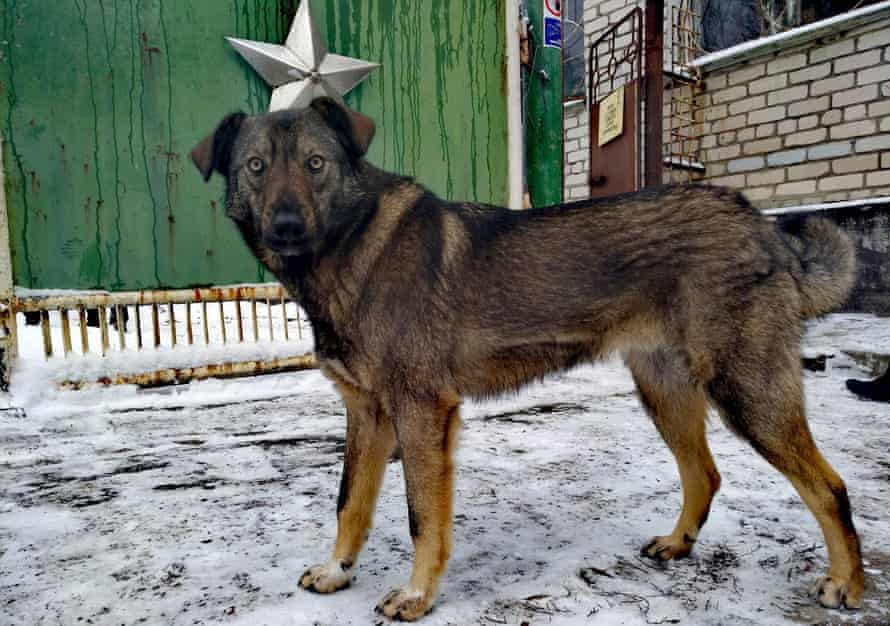
While the dogs get some nutrient and play from the visitors, their health needs are met by Clean Futures Fund, a US non-turn a profit organisation that helps communities affected by industrial accidents, which has fix up three veterinary clinics in the area, including 1 within the Chernobyl plant. The clinics treat emergencies and issue vaccinations against rabies, parvovirus, distemper and hepatitis. They are also neutering the dogs. Lucas Hixson, the fund'south co-founder, says: "I don't think we'll ever get cypher dogs in the exclusion zone but we want to become the population downward to a manageable size so we can feed and provide long-term care for them." This makes Chernobyl safer for the dogs, only also for the workers and visitors.
The Chernobyl plant has recently been sealed nether a new "sarcophagus" designed and built by a multinational grouping of experts, and like cooperation can be seen with the dogs. In the woods behind Chernobyl I look again at yellow-eyed Tarzan and meet, not a wild animate being, simply a playful example of global kindness and cooperation.
Source: https://www.theguardian.com/lifeandstyle/2018/feb/05/dogs-chernobyl-abandoned-pets-stray-exclusion-zone
Posted by: mercerexes1958.blogspot.com
0 Response to "Did They Bury And Concrete Animals In Chernobyl"
Post a Comment